WEEV AG, REG WATCH · ISSUE 34
Four Rules Fashion Can't Ignore
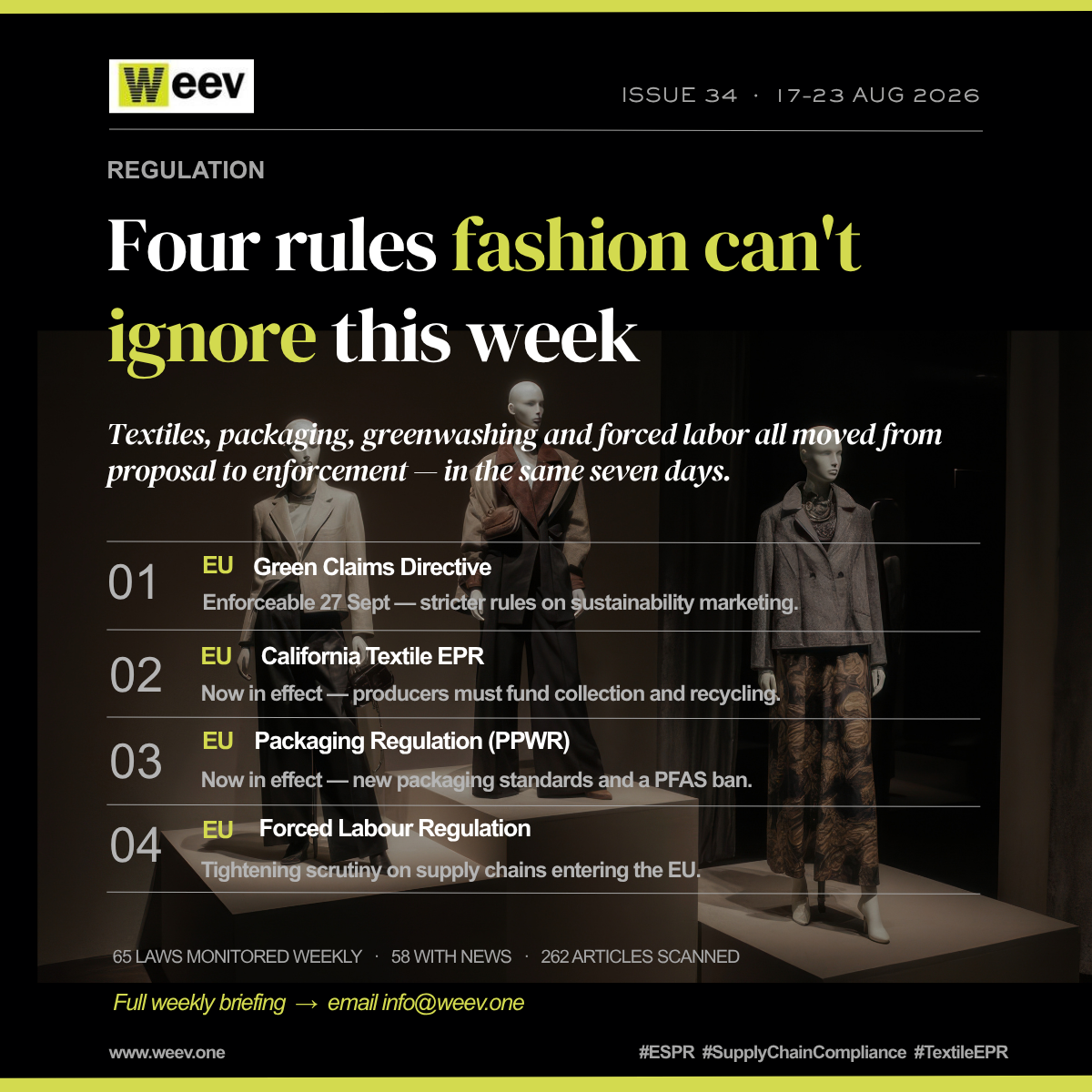
Regulation doesn't wait for a good moment. Four rules that affect how fashion and footwear brands design, package, source, and market their products just moved from proposal to enforcement — and each one changes what “compliant” actually means. Here's what changed, and what it means for your business.
1. EU Green Claims Directive — enforcement begins 27 September
The EU's Empowering Consumers for the Green Transition Directive (Directive (EU) 2024/825) becomes enforceable at the end of next month. It targets greenwashing head-on: words like “sustainable,” “eco-friendly,” and “climate-neutral” will need independent verification behind them. Marketing copy alone won't cut it anymore.
Why it matters: If your product pages, hangtags, or campaigns use sustainability language, you need evidence to back it — before the end of September. This isn't a future proposal. It's a hard deadline, five weeks out.
2. California Textile EPR (SB 707) — now in effect
California's Responsible Textile Recovery Act took effect on 1 July and just cleared its first legal test — a state court denied an injunction against the program on 6 August, clearing the way for it to proceed. It's the first Extended Producer Responsibility law for textiles anywhere in the US, putting the cost of collection and recycling on producers, not municipalities.
Why it matters: Selling textiles or footwear into California now means registering with the state's collection system as it stands up. Treat this as the first domino, not an isolated case — more states are watching how this one plays out.
3. EU Packaging and Packaging Waste Regulation (PPWR) — now in effect
As of 12 August, the EU's overhauled packaging rules are law — including a ban on PFAS (“forever chemicals”) in food-contact packaging, and a broader push to standardize packaging across the bloc into one circular system instead of 27 different national ones.
Why it matters: Food-contact packaging feels furthest from footwear, until you notice the direction of travel. Boxes, tags, and shipping materials are next in line as EU packaging law keeps expanding its reach. Brands shipping into Europe should plan for that now, not when it lands on their desk.
4. EU Regulation on Products Made with Forced Labour — supply chains under closer watch
Brussels is tightening the door on goods tied to forced labor, and it isn't alone — new US tariffs targeting forced-labor-linked imports from Mexico landed the same week. Two different governments, two different tools, one unmistakable signal: supply chain due diligence has stopped being optional on either side of the Atlantic.
Why it matters: Knowing your Tier 1 supplier isn't enough anymore. Regulators are asking questions that reach several tiers deeper — and brands without that visibility are the ones caught flat-footed when the question actually gets asked.
The Bigger Picture
Four regulations. Four jurisdictions. One theme: regulators no longer take a brand's word for it. Sustainability claims, material origins, labor conditions — all of it now needs to be provable, not just promised.
That's the exact gap Weev's Digital Product Passport infrastructure was built to close: one verified, traceable record of your product data, ready for whichever regulator — or jurisdiction — asks next.
Want the full report?
This issue covers 4 of the 65 laws tracked weekly by CSI Ltd., publisher of the Law into Action regulatory monitoring service, which follows active legislation across the EU, US, UK, and Asia. Their complete report includes every monitored regulation, full source articles, and detailed compliance guidance across all major markets.
📩 Email info@weev.one to request it.
Regulatory monitoring and underlying analysis by CSI Ltd. (“Law into Action”). Commentary and industry context by Weev AG. This article is for general informational purposes and does not constitute legal advice — consult a qualified legal or compliance professional for guidance specific to your business.